
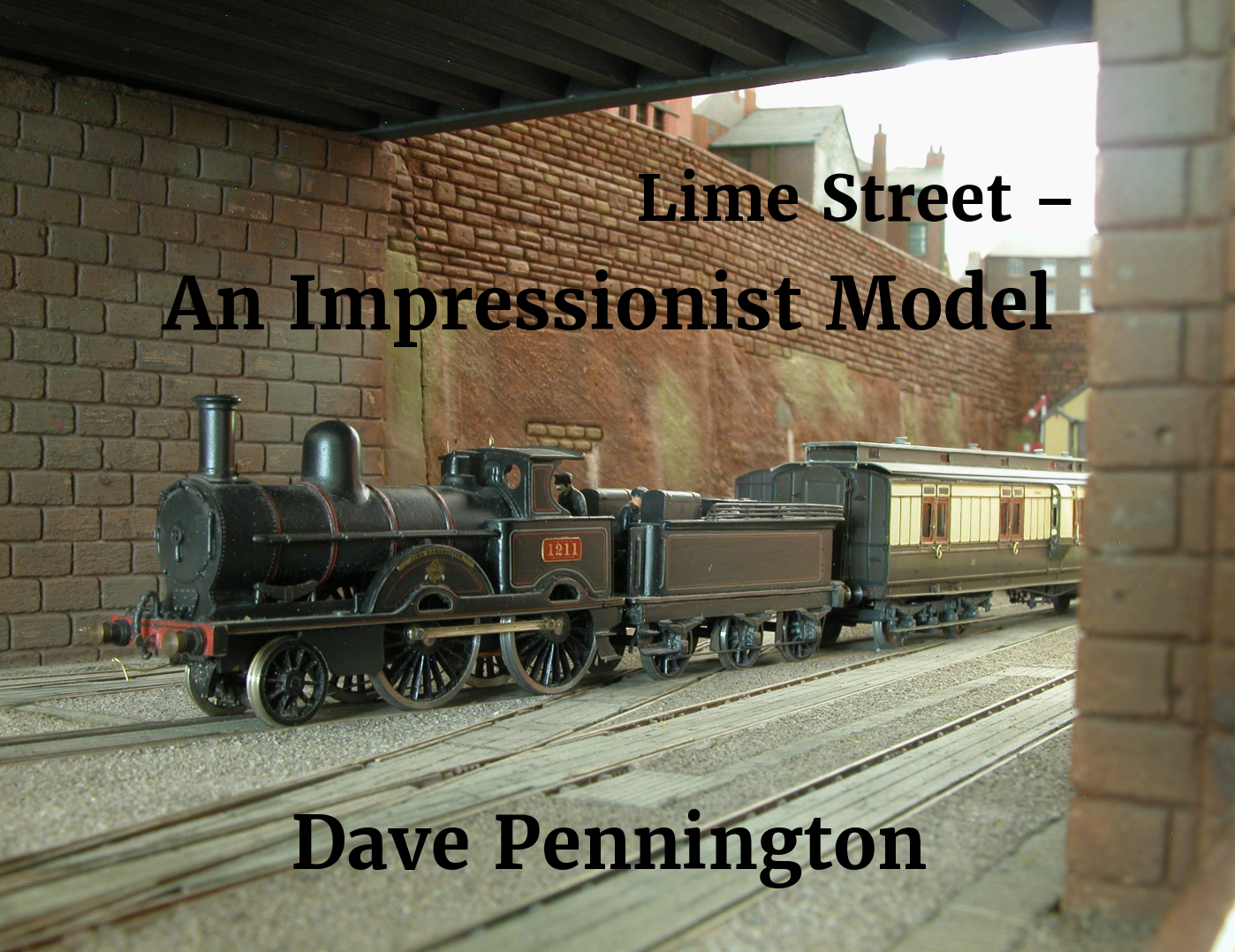
A 4mm scale EM gauge layout
At an exhibition I saw the original London Road by John Redrup and Jol Wilkinson and realised that a credible main line terminus was possible as a station to fiddle yard format that could be set up in the space available. Originating in Liverpool, I have always been fascinated by Lime Street with its deep cutting and restricted site. So, soon after the exhibition, in 1990, following much doodling, a plan of a much reduced version of Lime Street developed.
Given the limited space available, only an “Impressionist” version of the station was possible incorporating recognizable features of the prototype and its surrounds. The result being a station plan which is about one sixth of the area of the real thing but coincidentally about the same area as the 1850 station. The station plan produced then has stood the test of time and construction.
Part of the interest in modelling Lime Street is the variety of rolling stock that ran into the station. Trains from the West of England included GWR carriages from Bristol, Cardiff, Pensance and Kingswear and Cambrian carriages serving Aberystwyth in addition to LNWR vehicles forming these trains. Trains to Euston could have portions of the Sunny South express detached at Willesden. While the LNWR provided stock for the Liverpool portions the South Eastern & Chatham Railway and London & South Western Railway provided the carriages for the Manchester portions. However I have included a SECR Birdcage Brake Composite to represent the Liverpool-Folkstone, Dover and Deal service to provide some variety.
The LNWR stock includes a London-Birmingham set of the excellent new Bachmann 50ft Corridor carriages. A Liverpool-Leeds set of 42ft carriages is currently in the paint shop.
Local services are provided by a five coach Liverpool-Garston non-corridor set of 50ft arc roof vehicles from London Road models, a Liverpool-Bootle set of PC non-corridor carriages and a set of 30ft 1in six wheel carriages. Yet to be built is a five carriage 50ft cove roof Manchester Exchange Set.
A variety of parcels vehicles form a parcels train, a 26ft LNWR milk van and GW Siphon plus a 26ft Brake van form a milk train, and two LNWR and one GWR Fruit van serves as the perishable traffic. LNWR stock is completed by a couple of horseboxes, an open carriage truck and a 45ft open scenery truck. Work in progress includes a 50ft TPO, a 42ft Picnic Saloon, a 42ft radial tri-composite and a 50ft Corridor Brake Composite, and of course there are the usual kits still in their boxes.
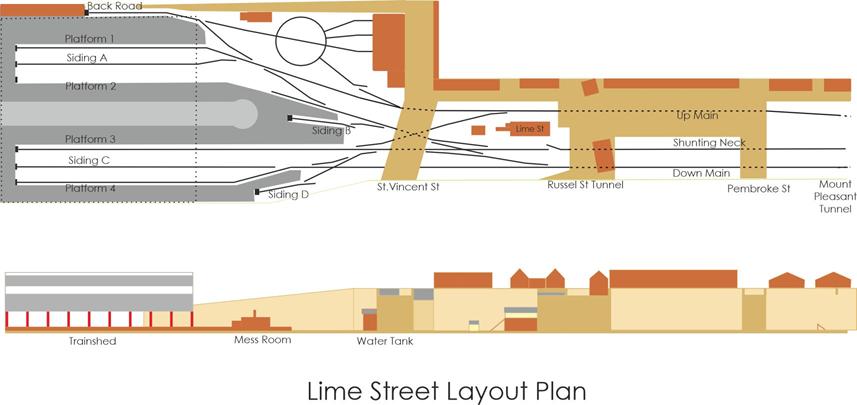
1. Lime Street Station Plan
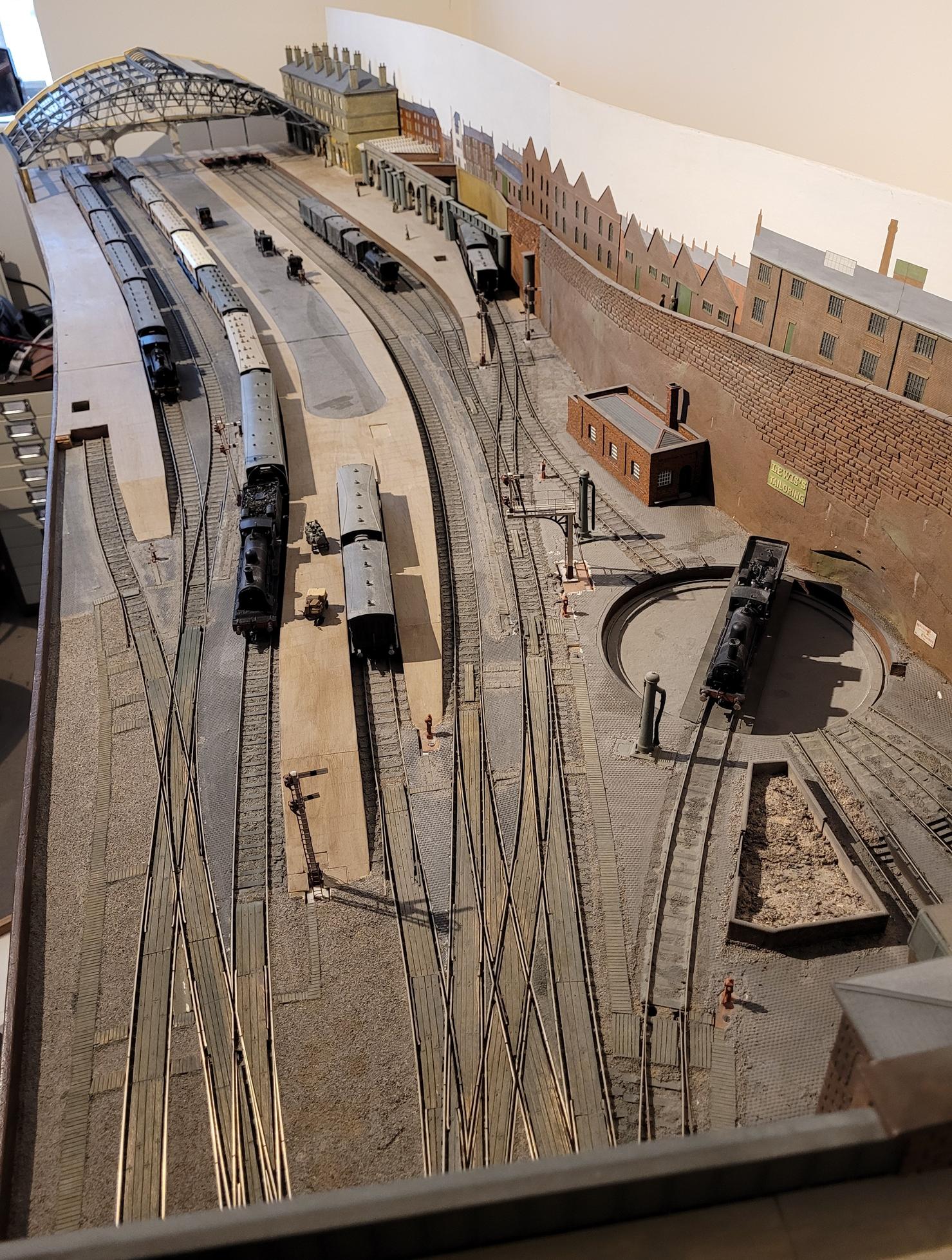
There are four platforms with a carriage siding between each pair of platform lines and a Back Road (LNWR terminology) running out from the north side of the trainshed to an area called the Fish Dock for fish. milk and perishables. Between the ends of platforms 2 and 3, there is an end loading dock and at the end of platform 4 a parcels dock. On the north side the 50ft turntable, large water tank above locomotive sidings and an accumulator tower are unique features of Lime Street.
No engine release crossovers were provided at the buffer stops so stock had to be drawn up the cutting into a long Shunting Neck between the Up and Down lines.
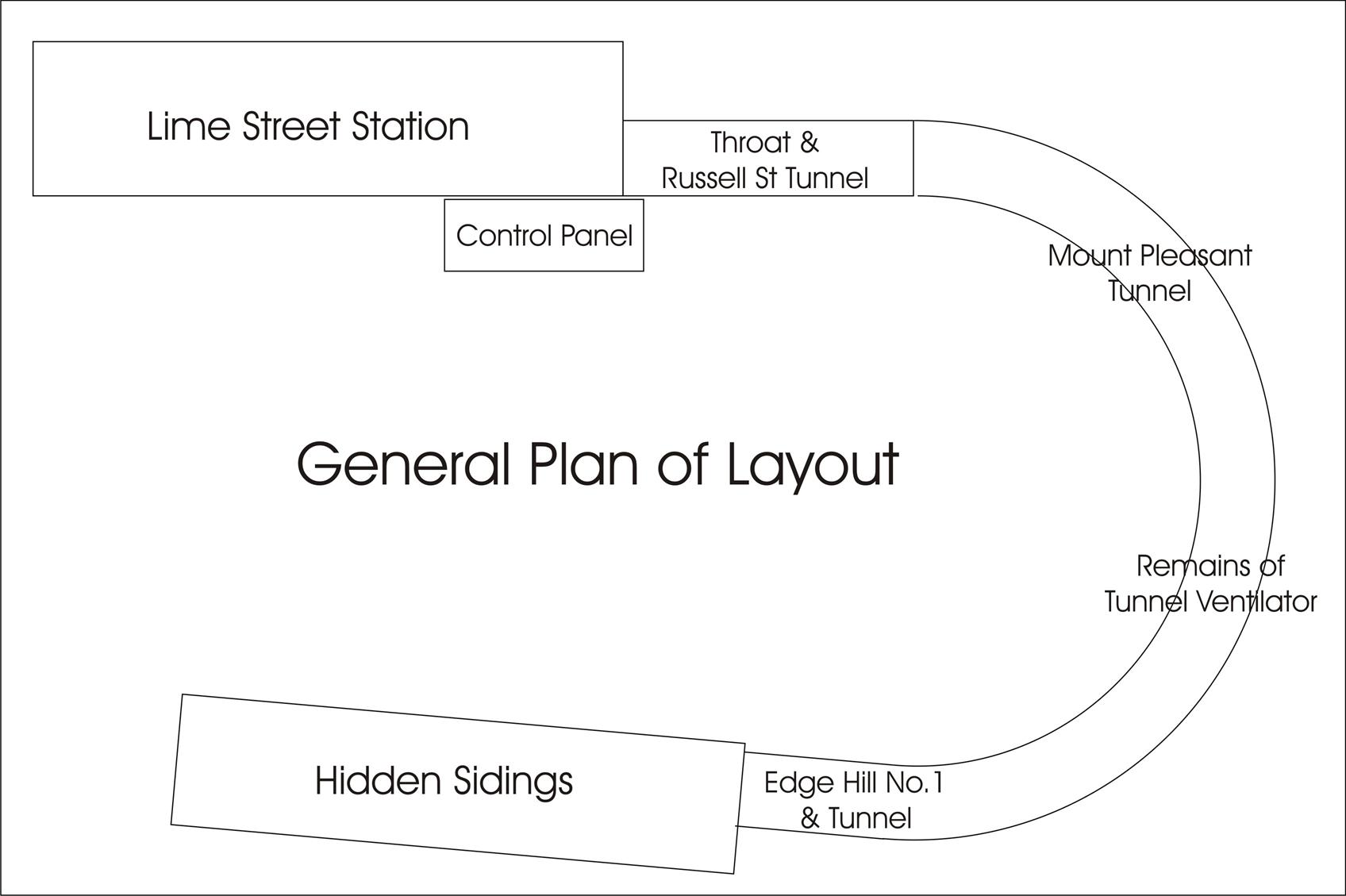
2.General Layout Plan
Originally the model was straight, with Edge Hill No.1 signal box immediately before the fiddle yard and rather too close to the station. However, a house move in 2011 provided a large room to accommodate the layout permanently. This required a change of plan at the Edge Hill end to insert a 180 degree curve between the station and Edge Hill No.1 signal box moving it much further from the station (about 15ft from the Lime Street Advanced Starter signal). The maximum platform length is 6ft so a long train can disappear into the cutting and be held at the Edge Hill Home signals without its tail end being visible near the station.
3. Curved End of layout
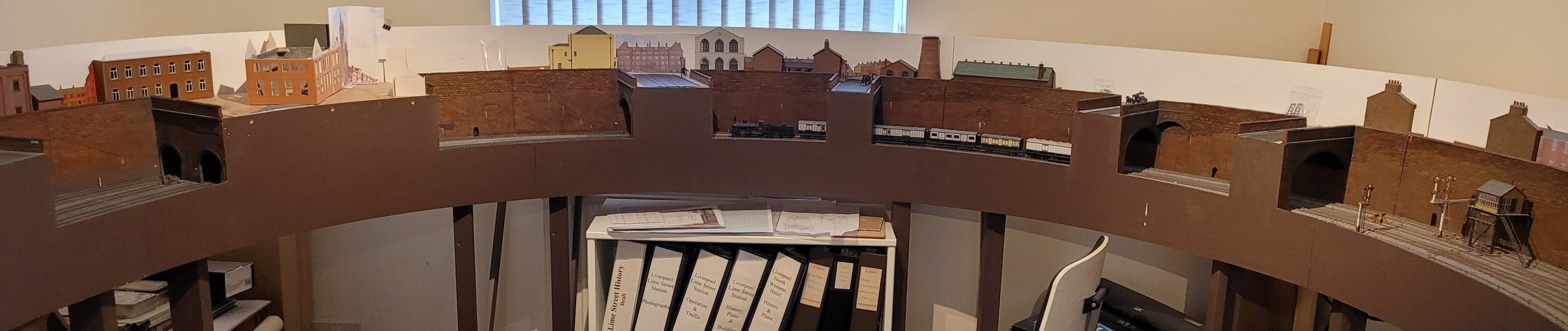
The real cutting is crossed by many bridges and several tunnels most of which have had to be omitted to fit the space available. The scenery above the cutting is largely freelance but attempts to represent the variation in building styles and periods, which changed along the cutting as Liverpool expanded.
Not visible in this view, at the station end, housing is Georgian, then there is the Liverpool Abattoir Company site, On the extreme left is a jam factory from nearby and, under construction, are several university buildings located above Brownlow Hill tunnel. Further round is Crown Street with its tram tracks crossing the cutting and the Smithdown Road tunnel ventilator site and Corporation Central Stables, Near to Edge Hill there was a large area of Victorian terraced streets either side of the cutting.
4. General view of the station
This view is taken from St.Vincent Street bridge. Platform 1 is on the right with three milk vans in the Back Road which runs out of the side of the trainshed under the long girder. A train of fruit vans is being shunted in Siding A. A train headed by a Jubilee is waiting to depart in Platform 3 with the first three carriages for Euston and four through coaches to Bournemouth, Brighton and a SECR carriage for Folkstone, Dover and Deal for the Sunny South Express.
A Liverpool-Garston set of 50ft non-corridor carriages hauled by Warford Tank No.2037 stands in Platform 4.
In the right foreground is the turntable and engine servicing roads with a brick ash bin by the exit line.
5. Station Roof & building
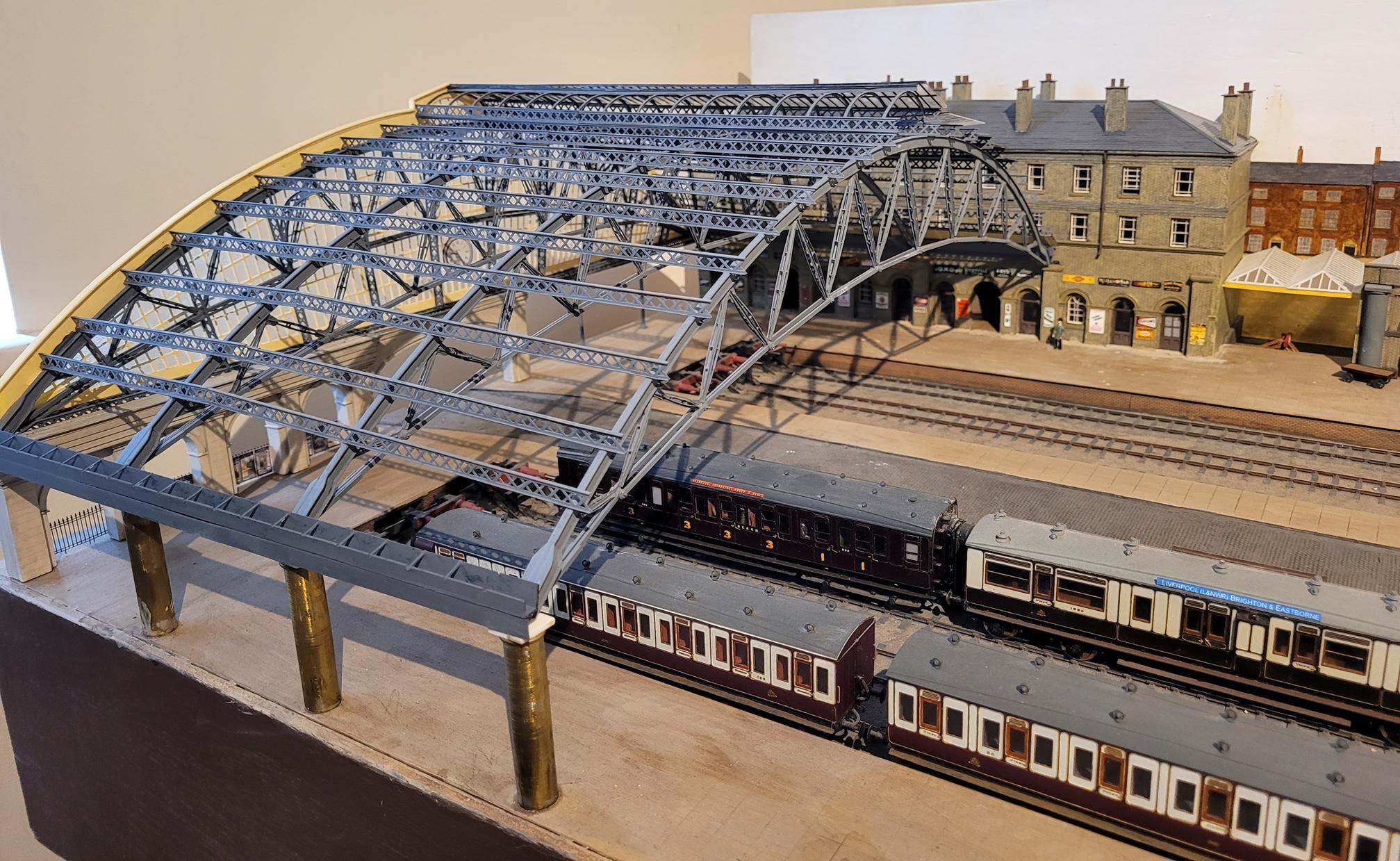
The platform ends and concourse beneath a section of station roof with the platform level station offices along Platform 1. The original intention was to build the whole station roof to the end of Platform 1 but a combination of the length of time to build each section of roof and the fact that it would severely restrict access to the track for maintenance resulted in a decision to build just the first four principals (main arch girders) at the concourse end.
Above the station offices, on the first floor, are the Northern Division Traffic offices and the second floor is an extension to the North Western Hotel which is behind the end of the roof.
In platform 4 is the rear end of a Liverpool-Garston Set while in Platform 3 an SECR Birdcage Brake Composite, with a roof board for Liverpool Folkstone Dover and Deal, and an LNWR Brake composite for Brighton & Eastborne.
6. Back Road, Fish Dock and backscene behind station
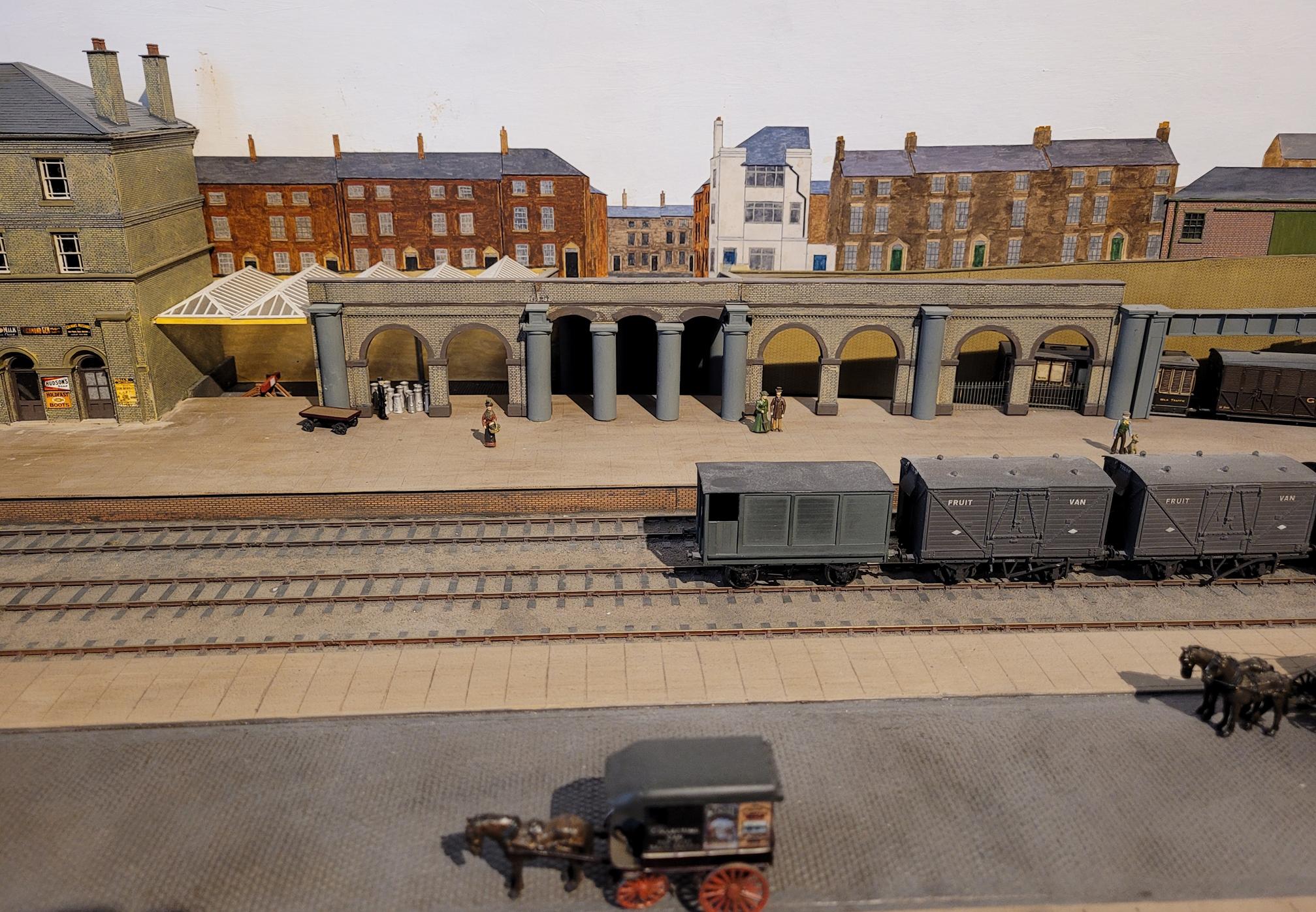
Behind Platform 1 are the columns and arches to support the side of the station roof. By the building is the glass roof over the Fish Dock area which extends behind the first two brick arches. Milk churns awaiting return stand under the first arch. The four columns mark the stub of Hotham Street that once extended across the station. On the right is the end of the long girder over the Back Road. A brake van and two Fruit Vans stand in Siding A.
On the roadway between Platforms 2 and 3 is an LNWR horse drawn parcels delivery van.
7. Shed area
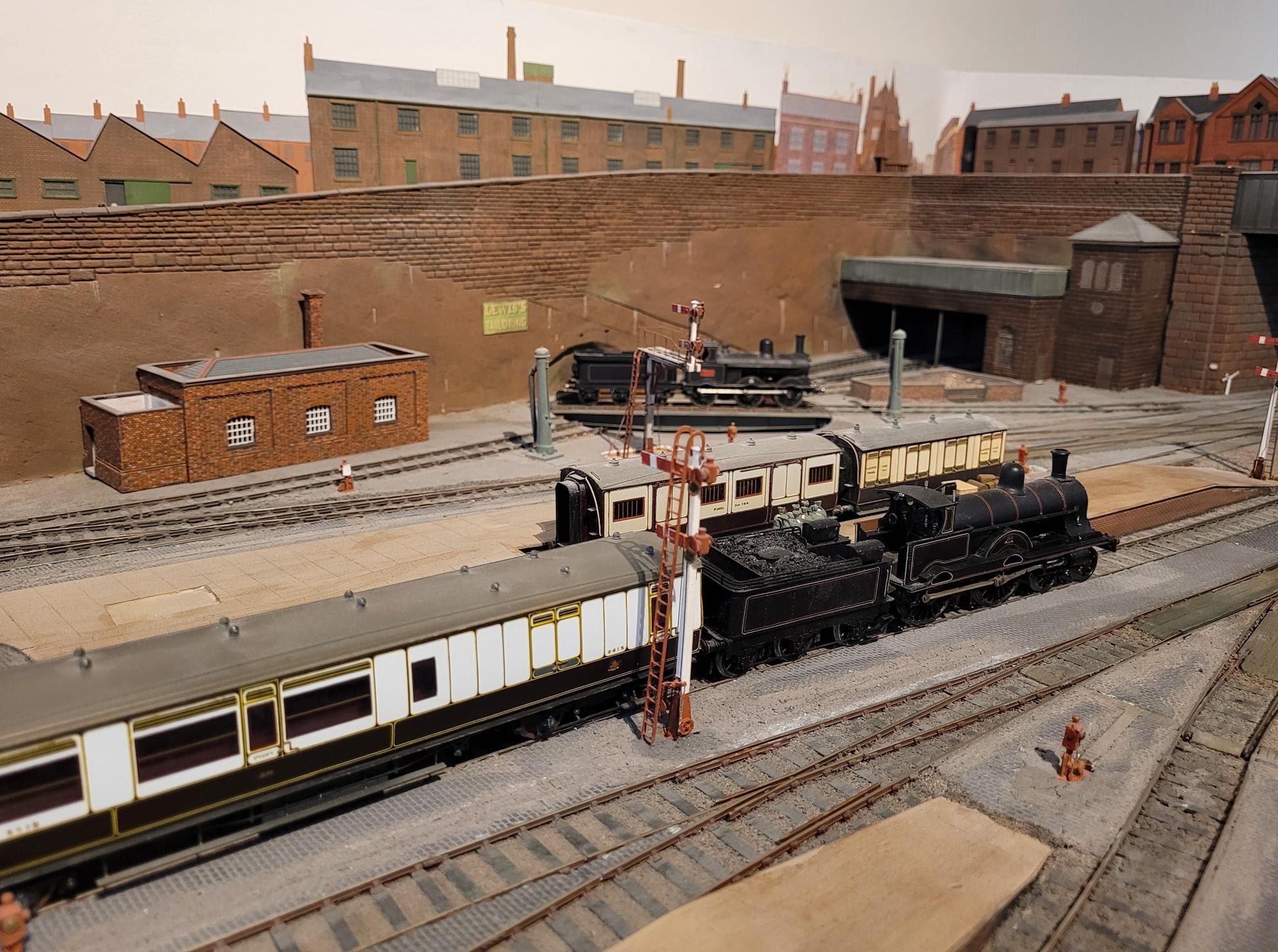
A view across the end of Platform 3 with a Jubilee 4-4-0 at the head of a train to Euston. Two parcels vans are parked in the Siding B end loading dock. On the left against the cutting wall is the mess room for yard and locomotive staff. Beyond that is the 50ft turntable occupied by a Cauliflower 0-6-0 behind which can be seen the cut-away in the cutting wall to allow the turntable to be enlarged from the original 42ft. In the distance are the locomotive stabling and servicing lines with ash pits, running under the large water tank to the right of which is an accumulator tower for the hydraulic supply to machinery around the station and in the hotel.
Above the cutting, forming the backdrop to this area, is the extensive Cope’s Tobacco works.
8. Train of 6 wheelers arriving
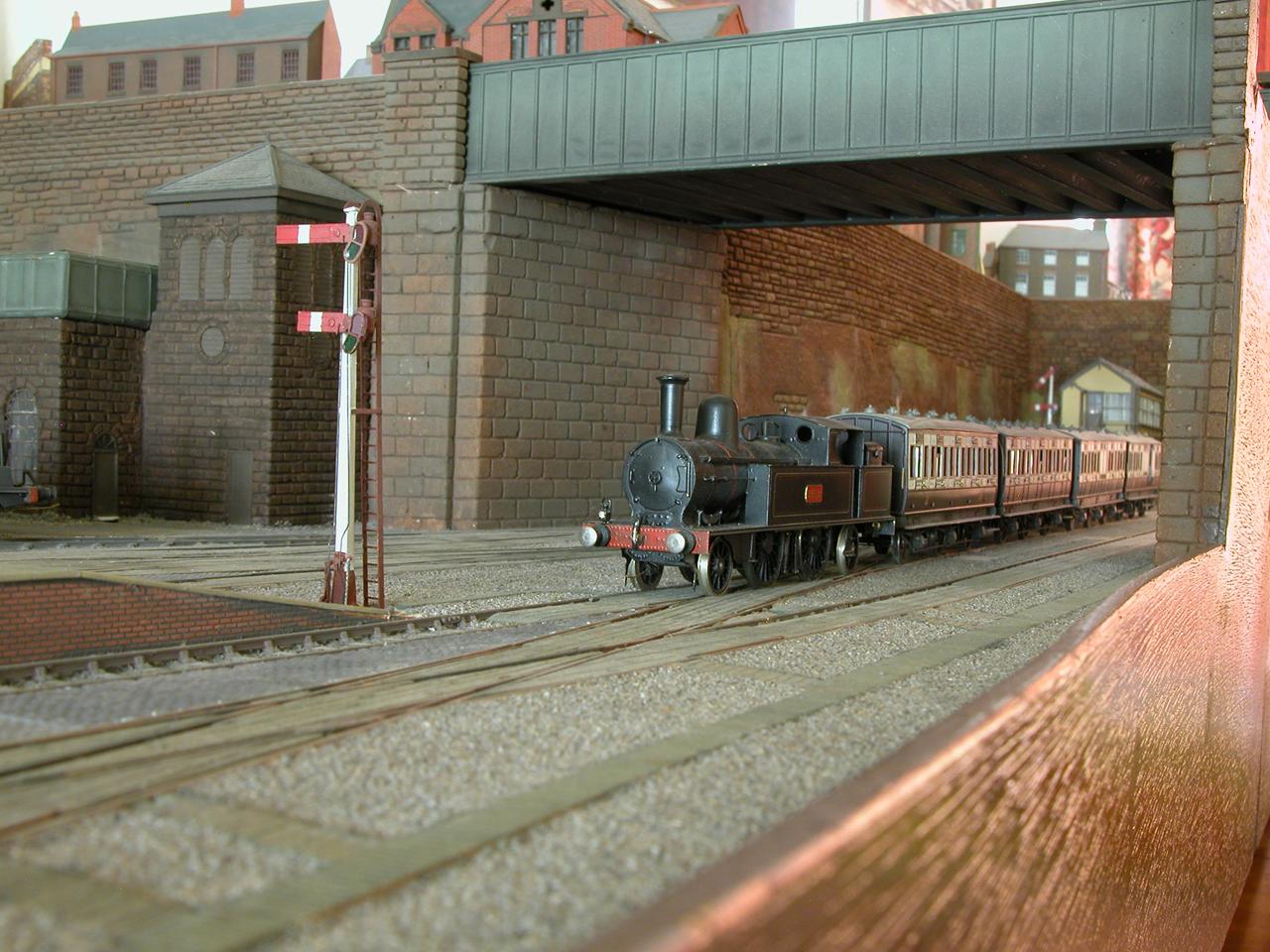
Below St Vincent Street bridge with its deep girder, 4ft 6in 2-4-2T No.2219 is drawing a local train of 30ft 1in 6 wheel carriages from the shunting neck into platform 3. At the end of platform 3 are the starter and shunt signals. Behind the signal post is the sandstone built hydraulic accumulator tower.
9. West of England Train arriving under St Vincent St
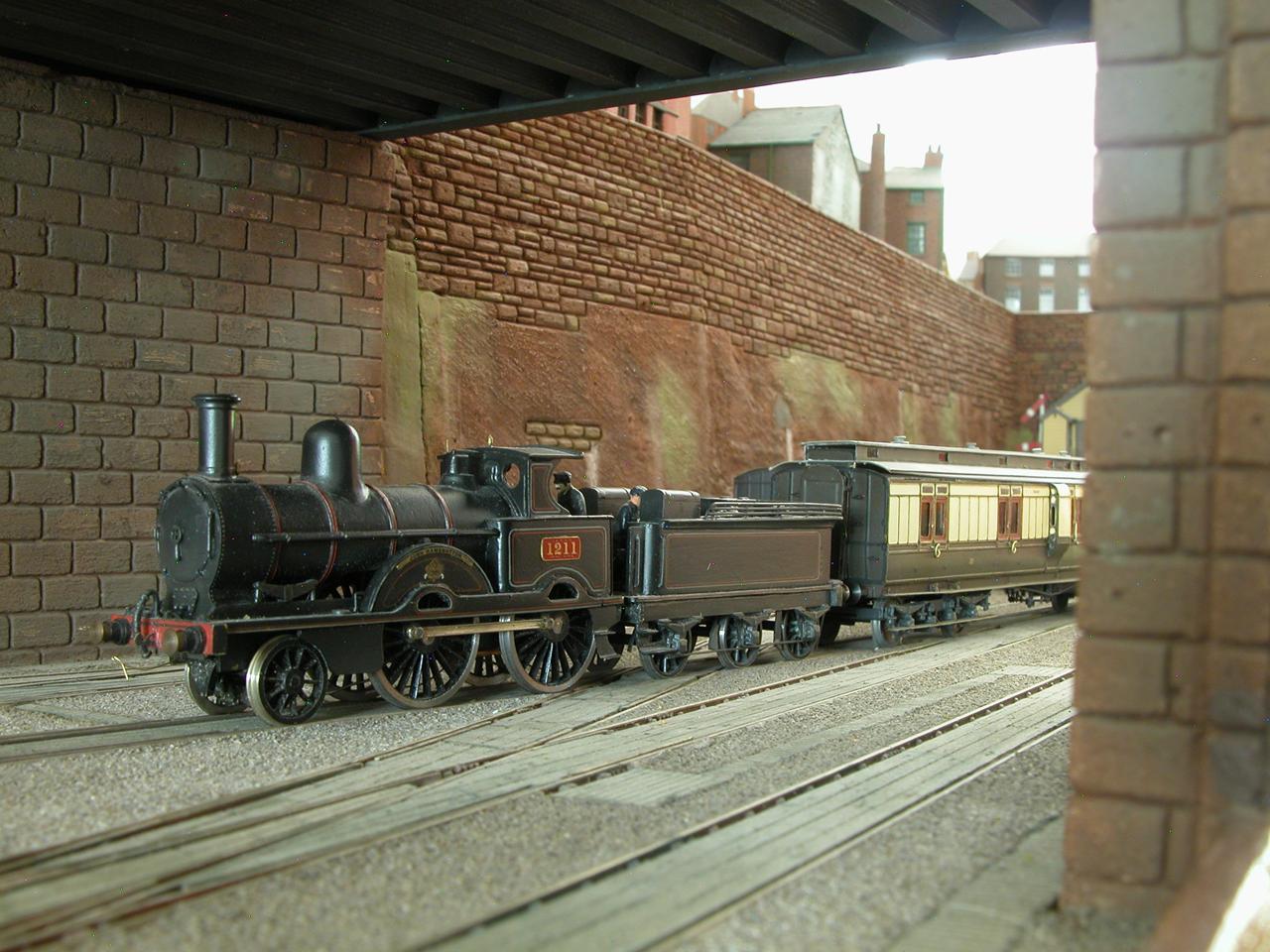
Renewed Precedent No.1211 John Ramsbottom on a train from Briston and the West Country, with a GWR Brake Third leading, is crossing from the Down line to Platform 2 below St.Vincent Street Bridge.
In accordance with a Board of Trade requirement at the time, the areas between and around the tracks have been raised to rail level, covering the point rodding and signal wires to reduce the trip hazards for shunters. This certainly removed the problem of modelling these features.
10. Lime St signal box
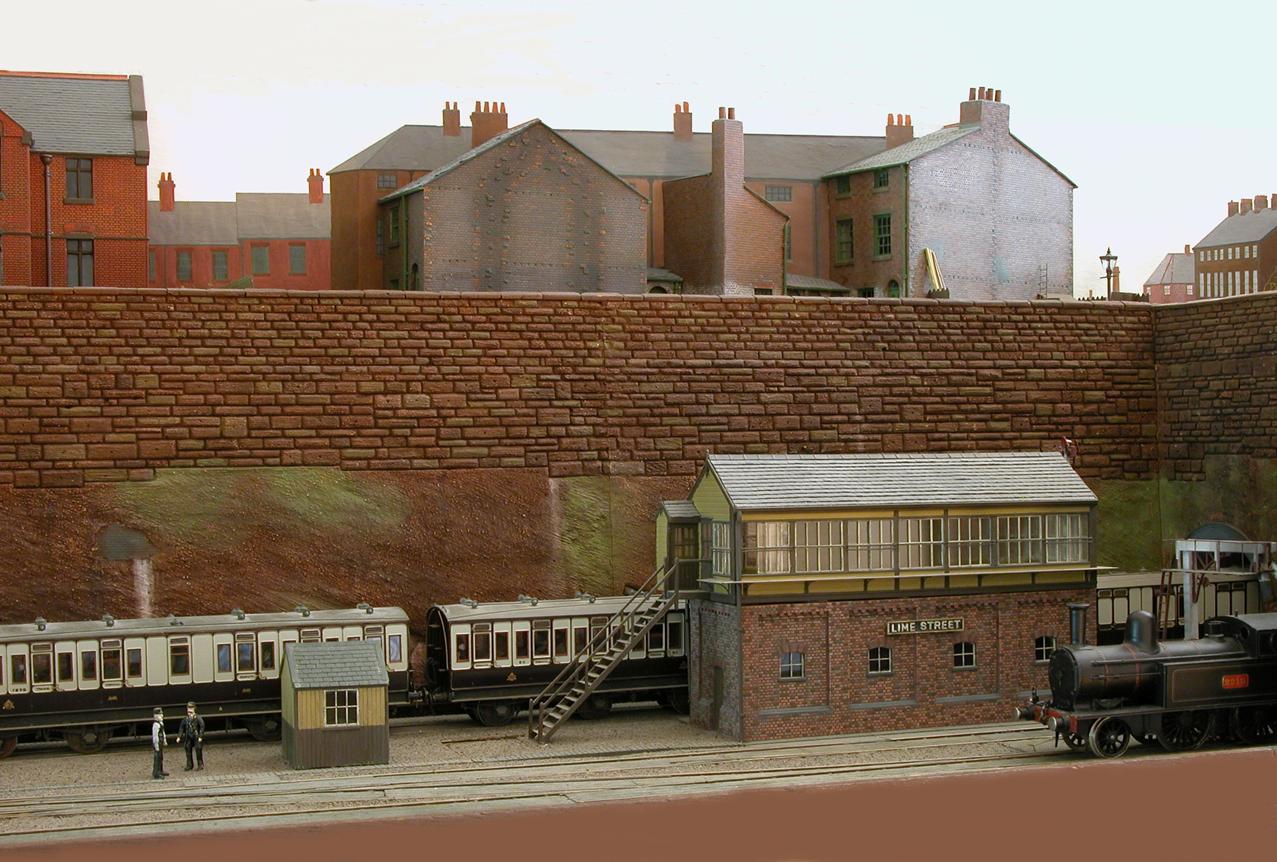
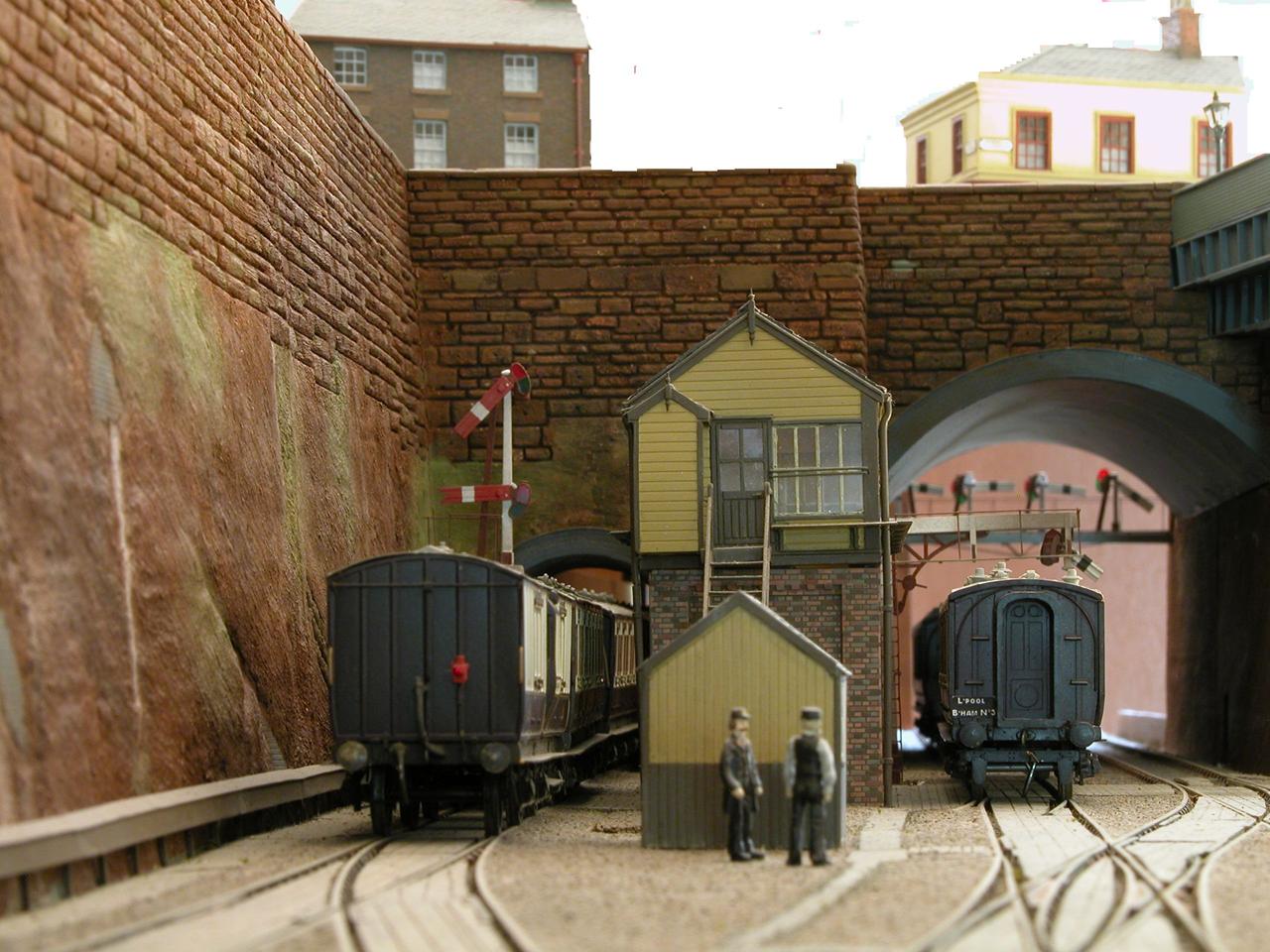
The model Lime Street signal box has a 60 lever frame, sized to match the model pointwork and signalling, and external staircase unlike the original which is about twice the size with an internal staircase. The upper part of the box is made from several London Road Models kits with a brick plasticard base for the locking frame. The small hut is for the shunters and yard inspectors. One of the yard inspectors is talking to a shunter nearby. A train of 6 wheel carriages is departing on the Up line. A 4ft 6in tank is arriving with a train on the Down Line.
11 .House back yards
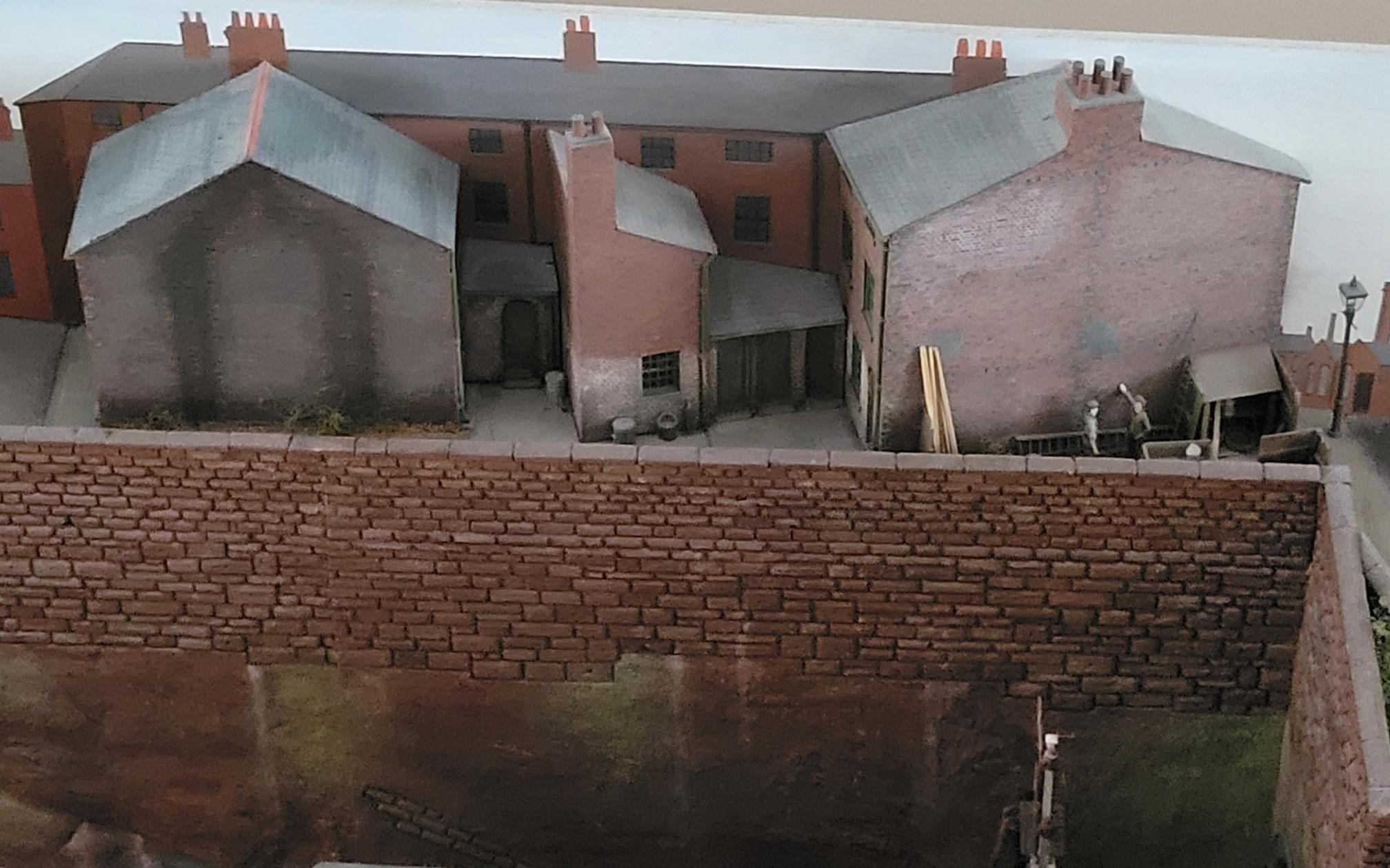
Above the cutting are some house backs and a back yard based on a photograph of old Liverpool. The gable ends show signs of the demolition of houses to make way for the extension of the station.
12. Russell St Tunnels
Lime Street signal box and a shunters hut stand between the Up line and the shunting neck. Behind are the single track Up line tunnel with the end of a departing train passing the Advanced Starter and the double track Russell Street tunnel with girders above carrying the part of the street over the corner of the cutting, based on a feature drawn in Jack Nelson’s LNWR Portrayed. The end of Liverpool-Birmingham Set No.3 is reversing out of the shunting neck
13. Russell Street
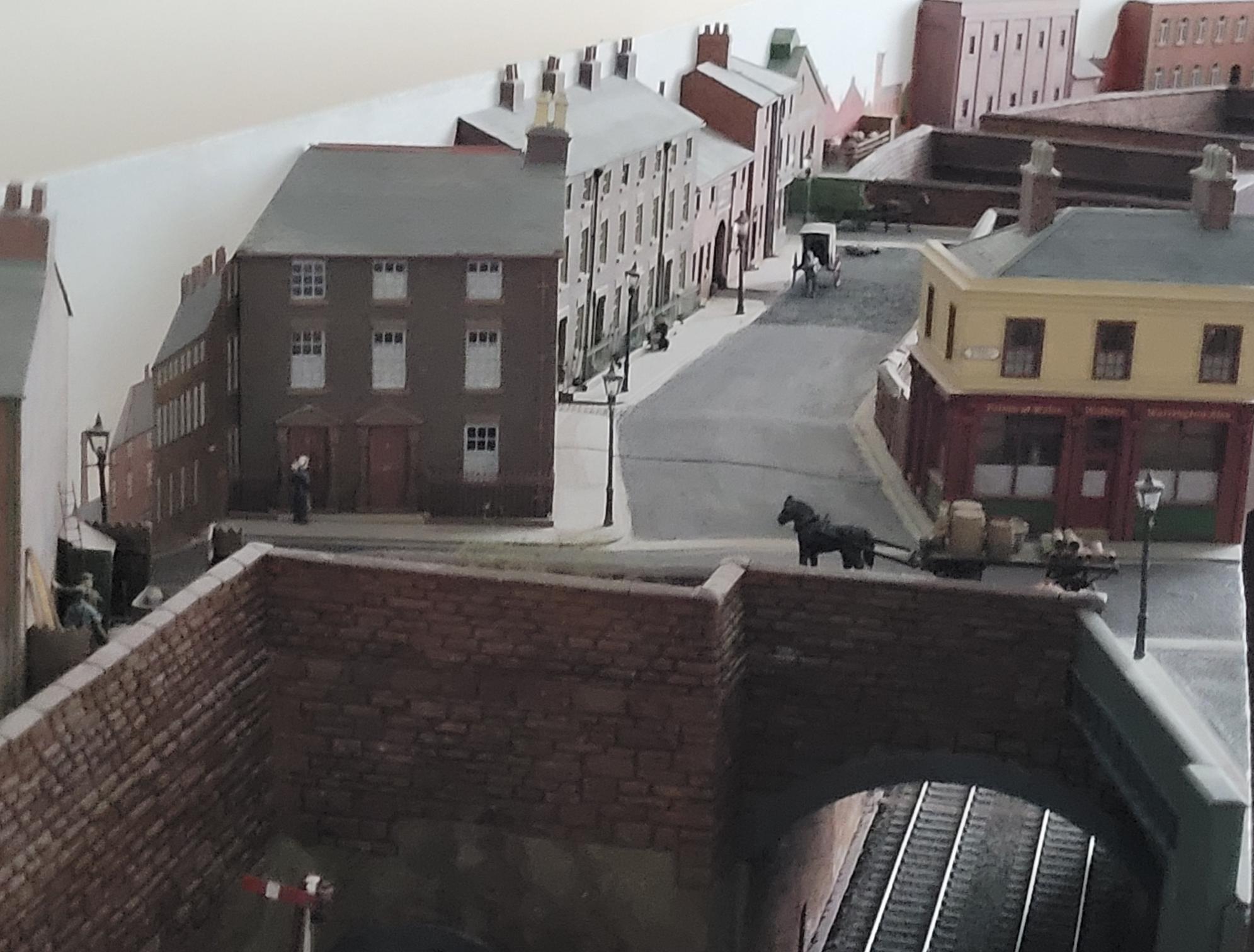
Russell Street crosses the line above tunnels. Georgian houses and the Prince of Wales public house stand on opposite corners of Bronte Street that runs along the top of the cutting.
.
14 Home signals and shunter
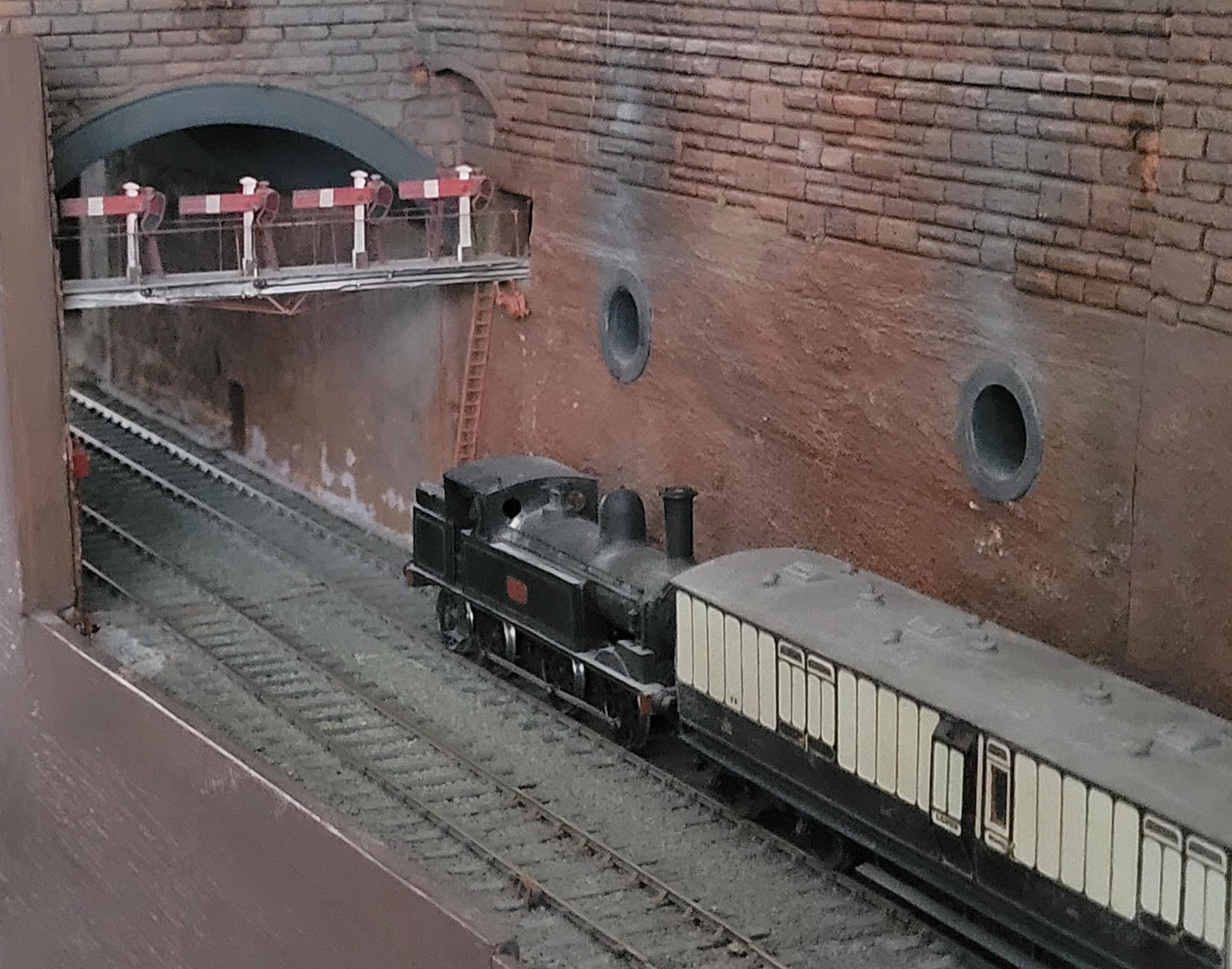
The home signals for the station, one for each main platform, are mounted on a gantry across the cutting below Bronte Street. The signals all apply to the Down line in the foreground. Coal tank No.1259 is standing in the shunting neck with a 50ft Full Brake and train waiting the ground signal at the other end of the short tunnel to shunt into a platform The circular holes in the cutting wall ventilate the single track up line tunnel below the street. In the tunnel is one of the refuges provided for staff working in the cutting.
15. Bronte St
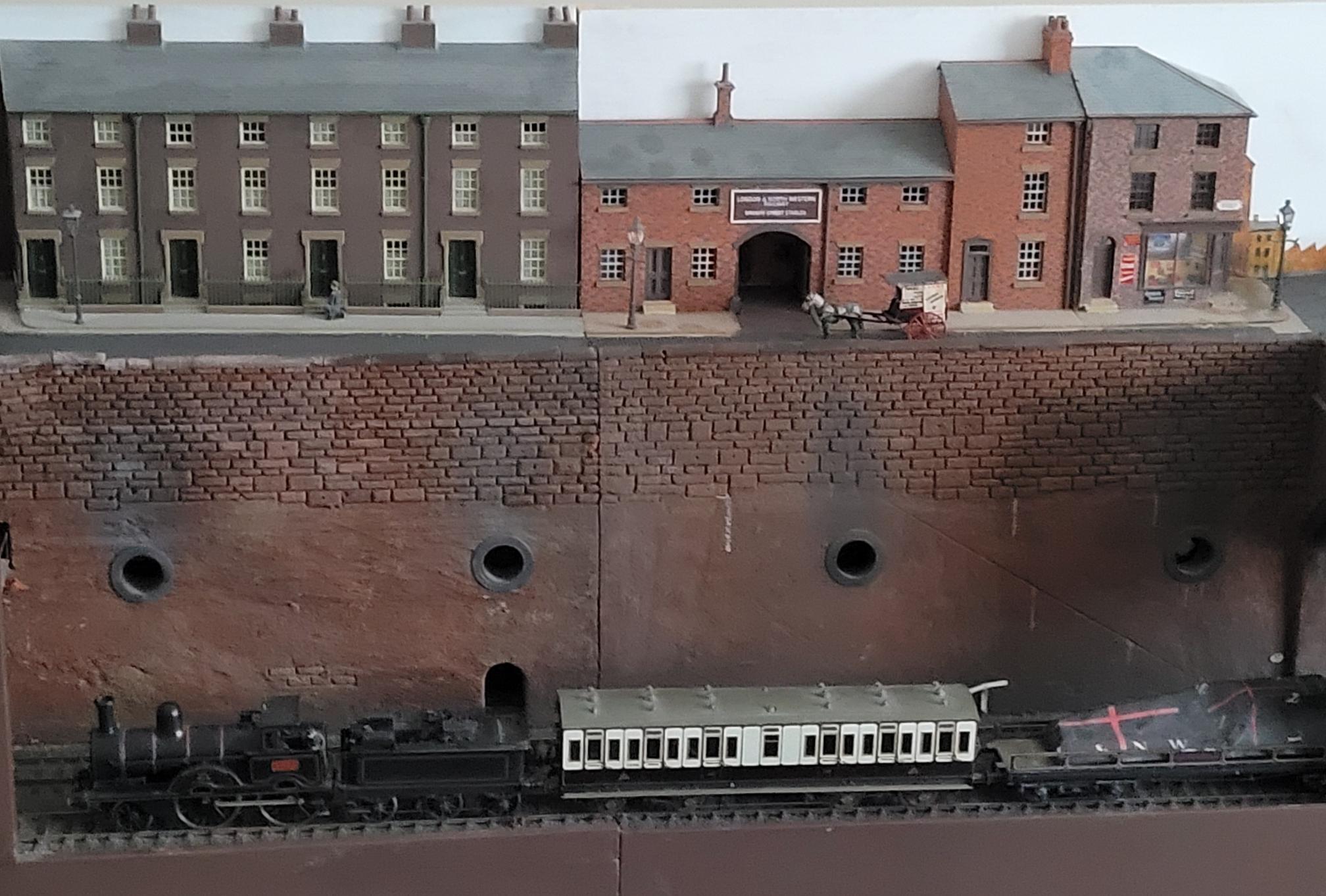
Along Bronte Street are Georgian houses, the LNWR stables for the horse vehicles and horses serving the station, a house and a corner shop forming the low relief backscene above the cutting. Outside of the stables an LNWR two wheel parcel van is waiting to set off on its round after a change of horse
Along the backscene the intention has been to represent the style and type of building around that section of the cutting. Street names used are from real streets close to or crossing the cutting and are in the correct sequence along the cutting, albeit with many bridges and two tunnels being omitted in the reduced length available.
In the cutting an Improved Precedent with a Theatrical Special comprising a 42ft radial composite for the theatre company, a 45ft open scenery truck for the plays scenery and a 30ft 1in brake van for the luggage and props is stopped at the home signals. These trains usually ran on Sundays when theatre companies moved to the next town in their tour.
16. End of single line tunnel
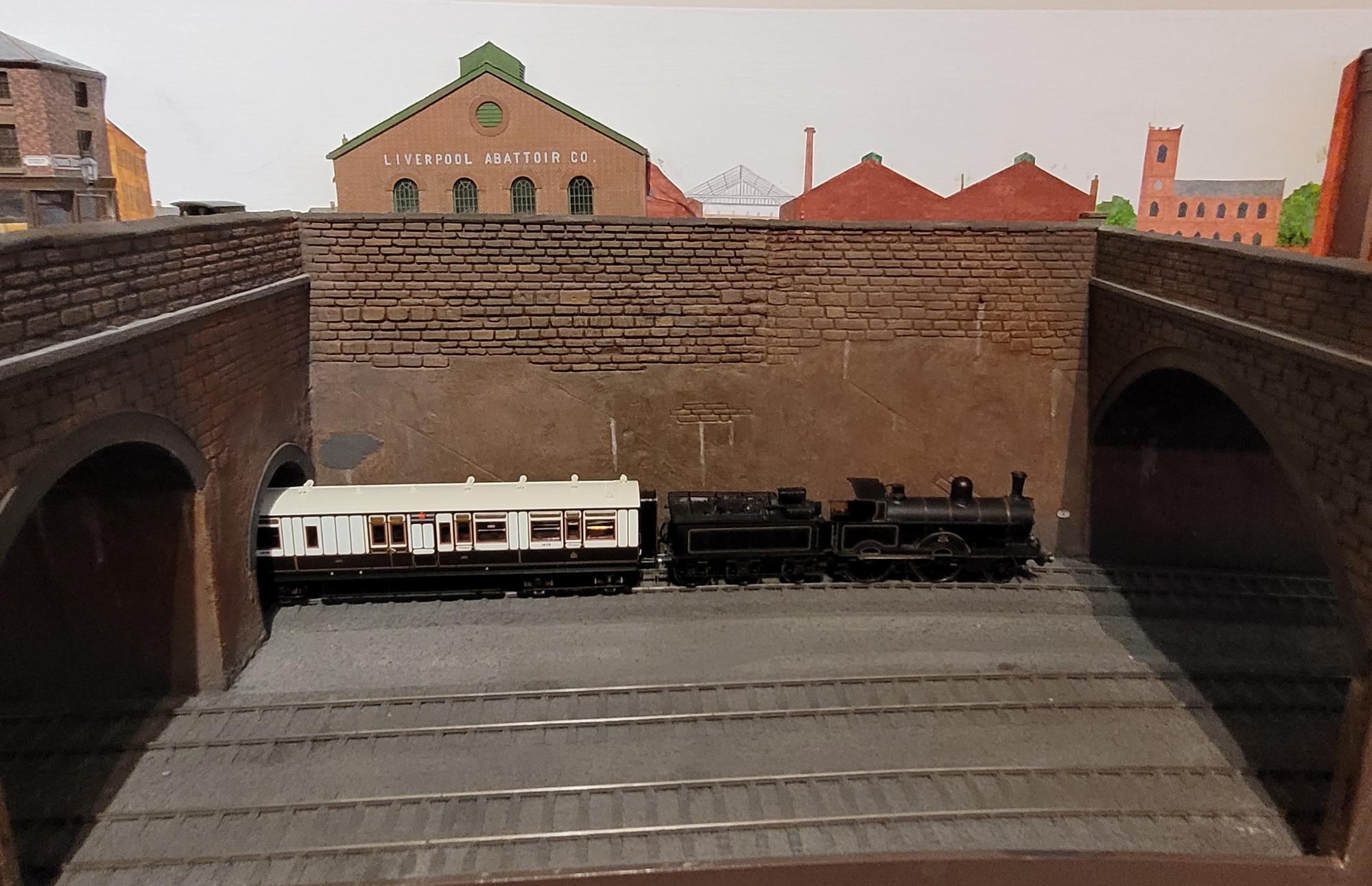
Renewed Precedent No.1211 John Ramsbottom has emerged from the end of the single track Up line tunnel below Pembroke Street with a brake composite at the front of a Birmingham train. Above the cutting is part of the Liverpool Abattoir Company’s premises that were bisected when the tunnel was opened out into a cutting. A Permanent Way hut to sit between the Up line and Shunting Neck is needed as in the prototype.
17. Crown Street
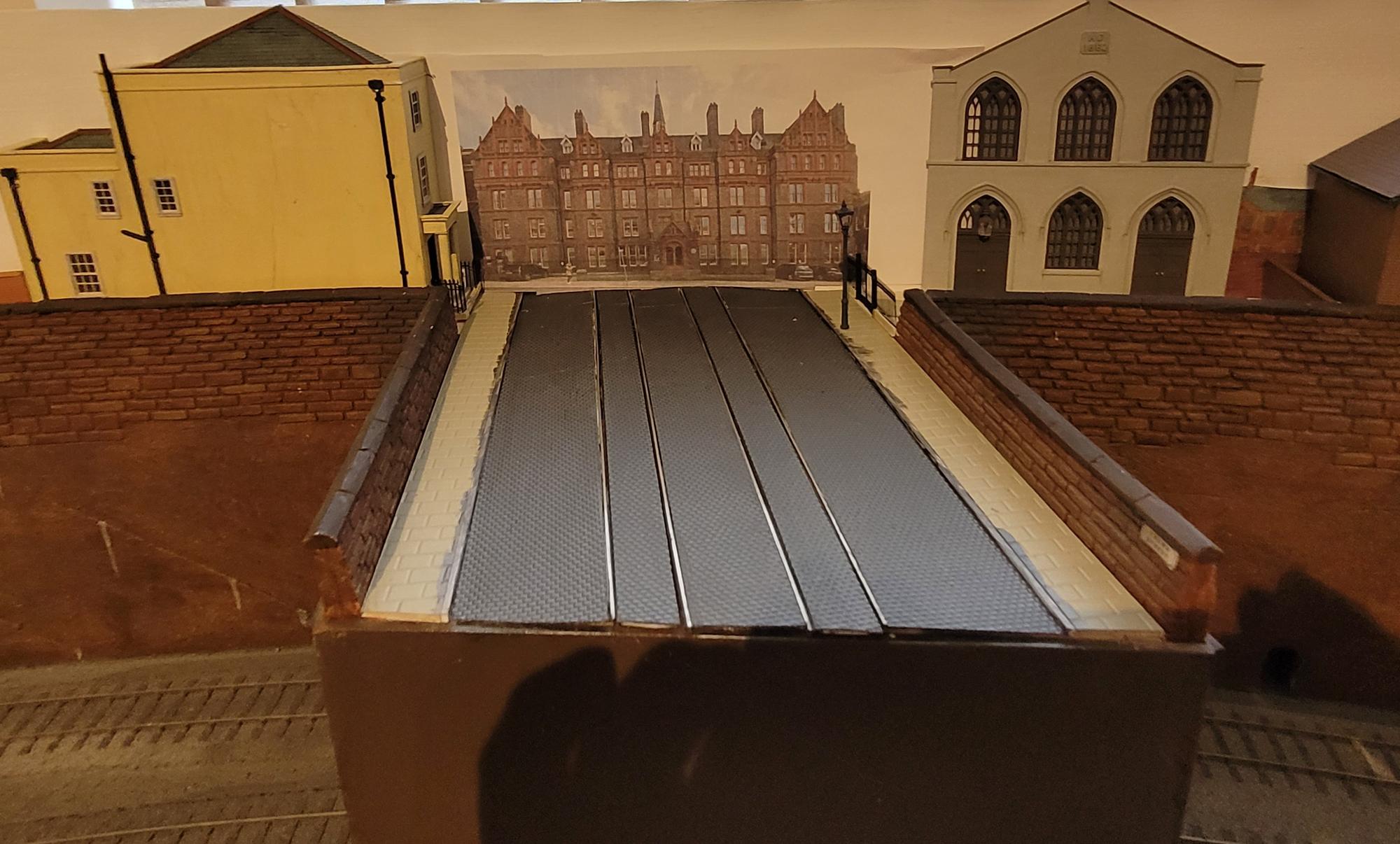
Crown Street bridge with a rendered Georgian house, typical of the area, on one side of the road and a chapel based on one from Liverpool on the other. Tram tracks run along the street. A Liverpool Corporation Dick Kerr tram is under construction to stand on the bridge.
The backscene is a work in progress with a photograph of a Liverpool hospital building awaiting painted perspective buildings on each side.
18. Smithdown Lane
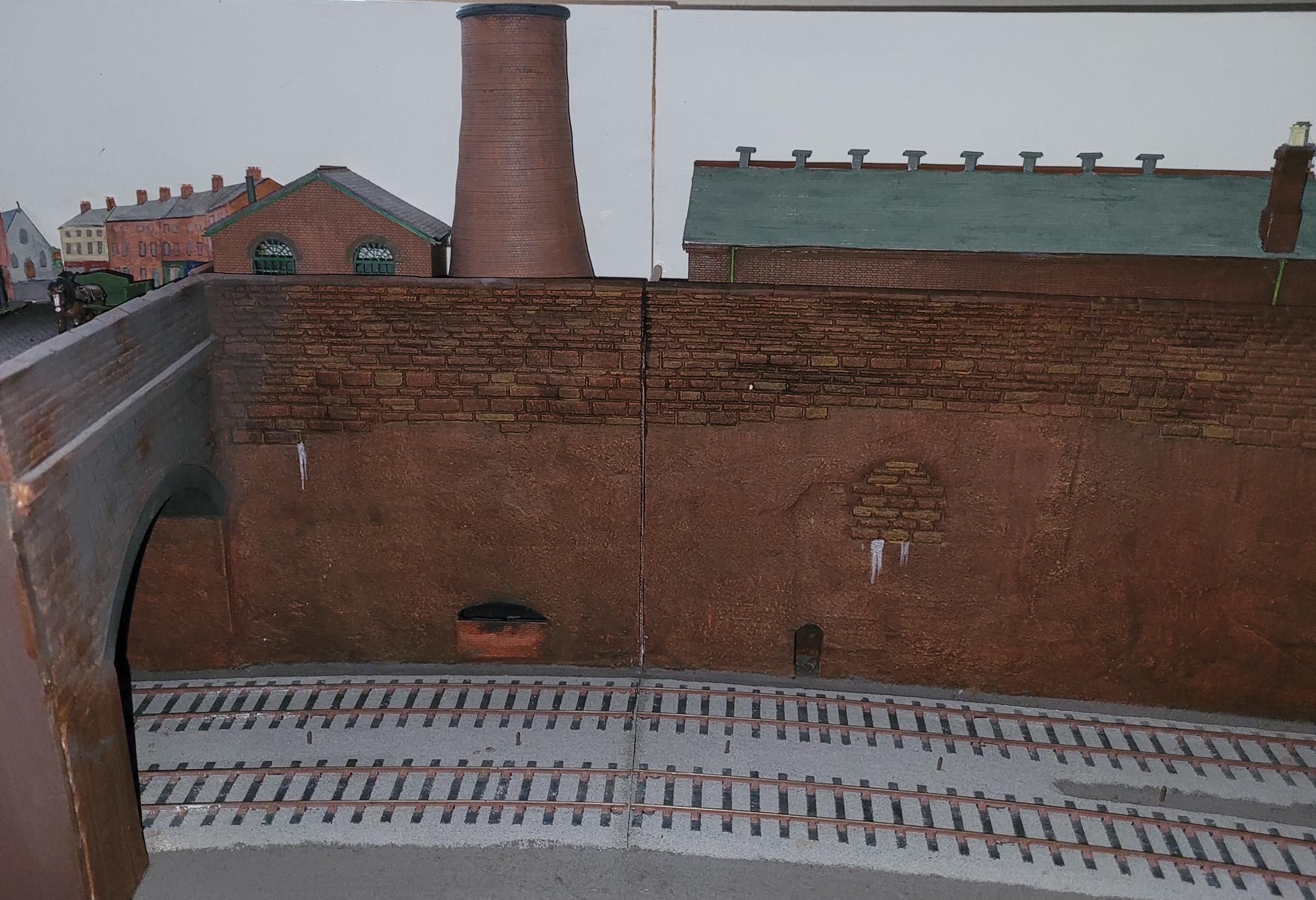
At the left is Smithdown Lane crossing the cutting. Nest to it is a representation of the tunnel ventilator chimney and engine house used to remove smoke from the tunnel before it was opened out into a cutting. The model chimney at 6in high and 3in diameter at its base is considerably smaller than the original which would be about 2ft 6in high and 8in in diameter. In the cutting side at rail level is the partially bricked up cross shaft leading to the fan below the chimney. Nearby is the walled up opening as a nod to the Williamson tunnels that crossed the line above the original tunnel being exposed by the opening out of the tunnel. Next to the tunnel ventilator chimney is a stable block that was part of the Corporation central stables. The stable building is based on a drawing of LNWR stables in the Society Archives.
19. Edge Hill No.1 with signals and terraced houses above
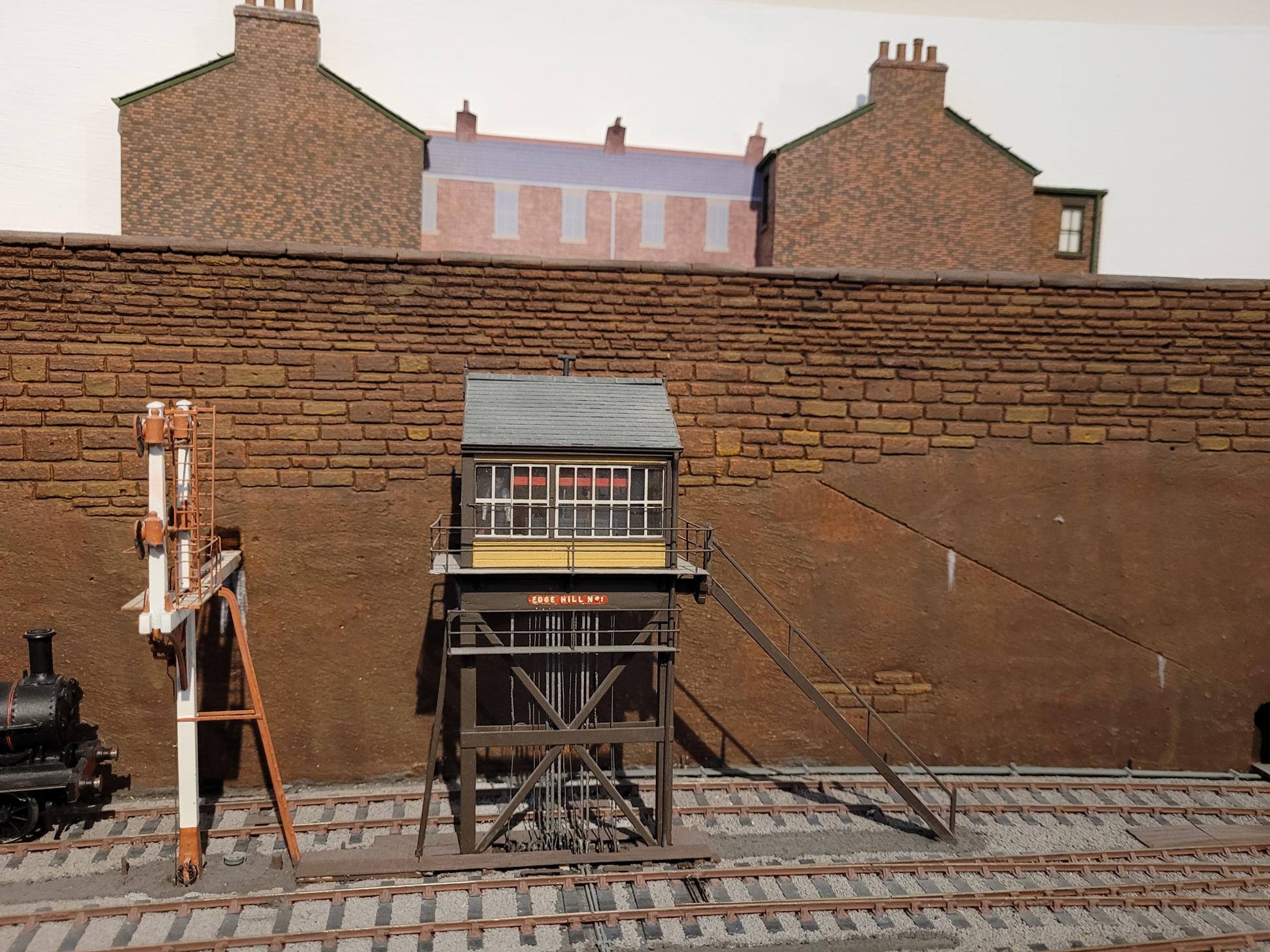
Edge Hill No.1 signal box sits above the Up line, the rodding and signal wires down from the locking frame can be seen through the supporting legs. The short rods with wheels at the lower end are the adjusters for the distant signal wires.
20. Edge Hill Signals
The Edge Hill Home signals indicate that the Up line splits into Up Slow and Up Fast on the other side of the short tunnel under Tunnel Road. The signals are operated from the fiddle yard panel with a point setting in the fiddle yard determining which signal is pulled off. The slotting of the distant signals is simulated by the slow line arm remaining on when the home is pulled off while for the fast line the distant comes off with the home signal. On the right is the Advanced Starter for the Down Line with its fixed distant requiring the trains to be under control as they approach the Lime Street Home signals. Ground signal control the entrance and exit from the refuge siding.
Waiting at the Up Home signals is Compound No. 503 Dreadnought heading a train to Bristol and the West Country.
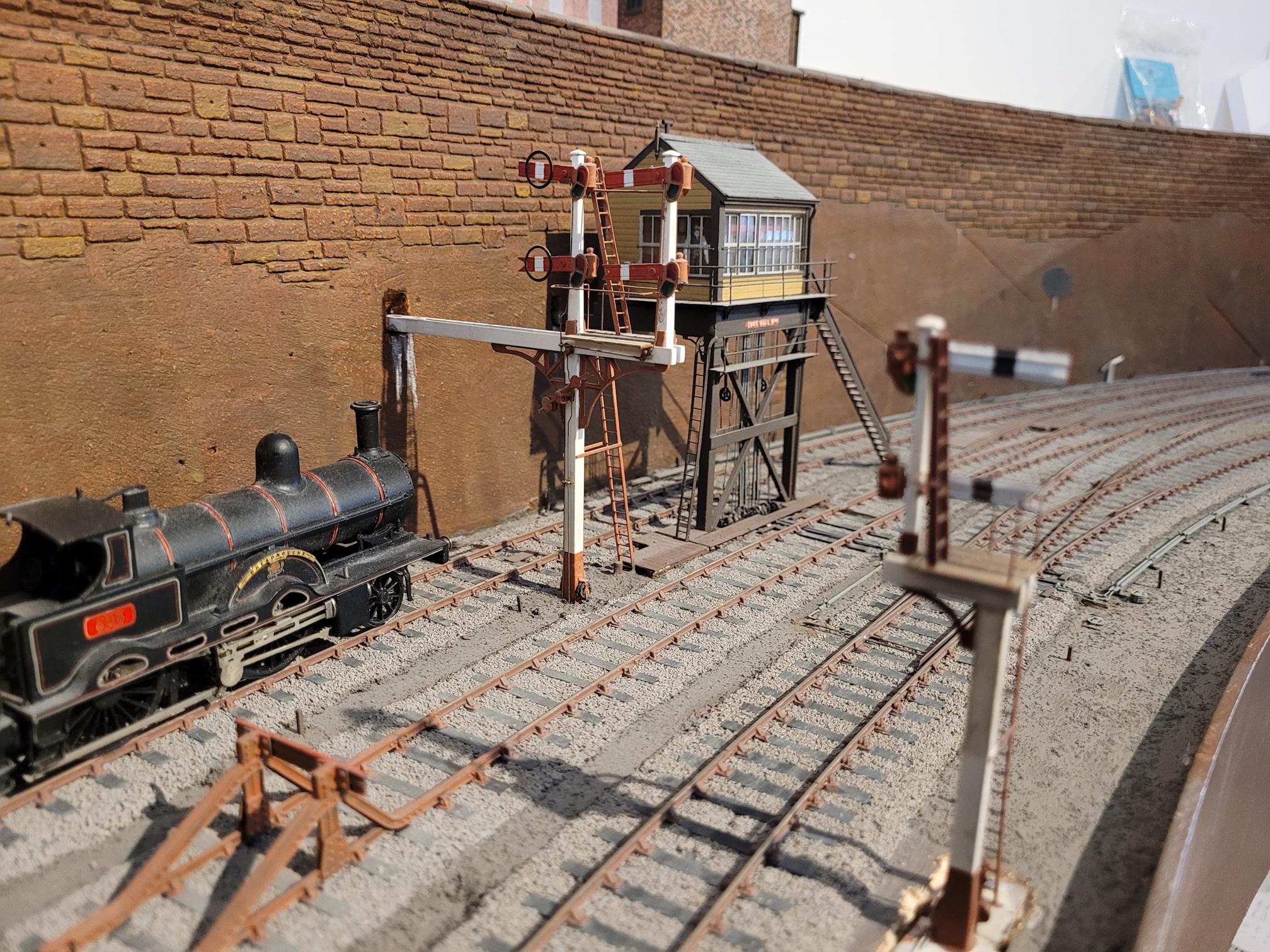
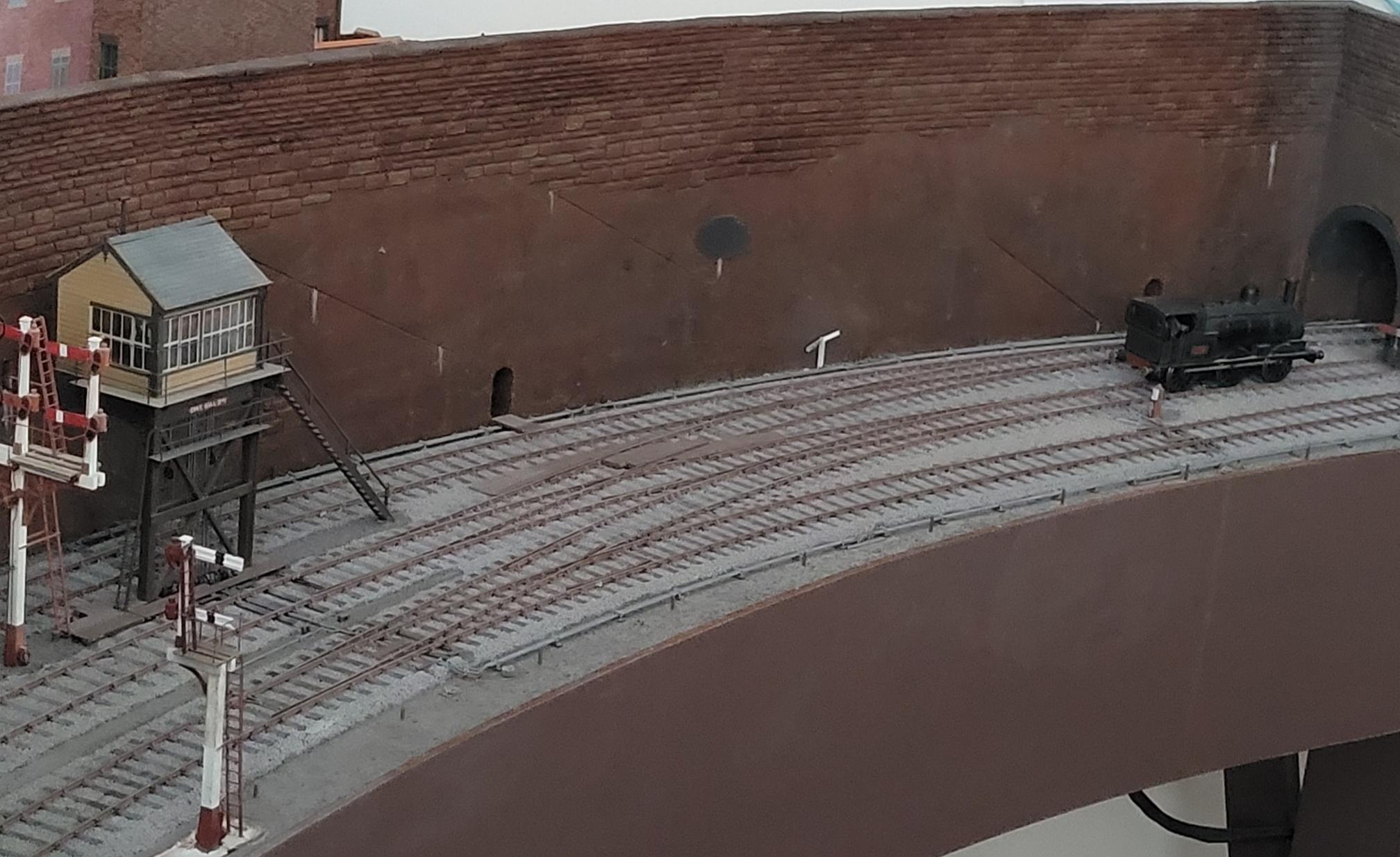
21. Edge Hill refuge sidings with banking engine
By Edge Hill No.1 signal box a refuge siding between the running lines with trailing crossovers to allow a banking engine to drop off the rear of an up train and reverse into the refuge to await the signal to return to Lime Street. Here a station pilot 0-6-0ST is standing in the siding after banking an up train. On the model the points and ground signals provide an interesting feature, with all of the point rodding and signal wires visible, These are non-working as banking engines are not used on the model. The tunnels lead into Edge Hill station under the Tunnel Hotel yet to be built.
22. Train leaving Edge Hill
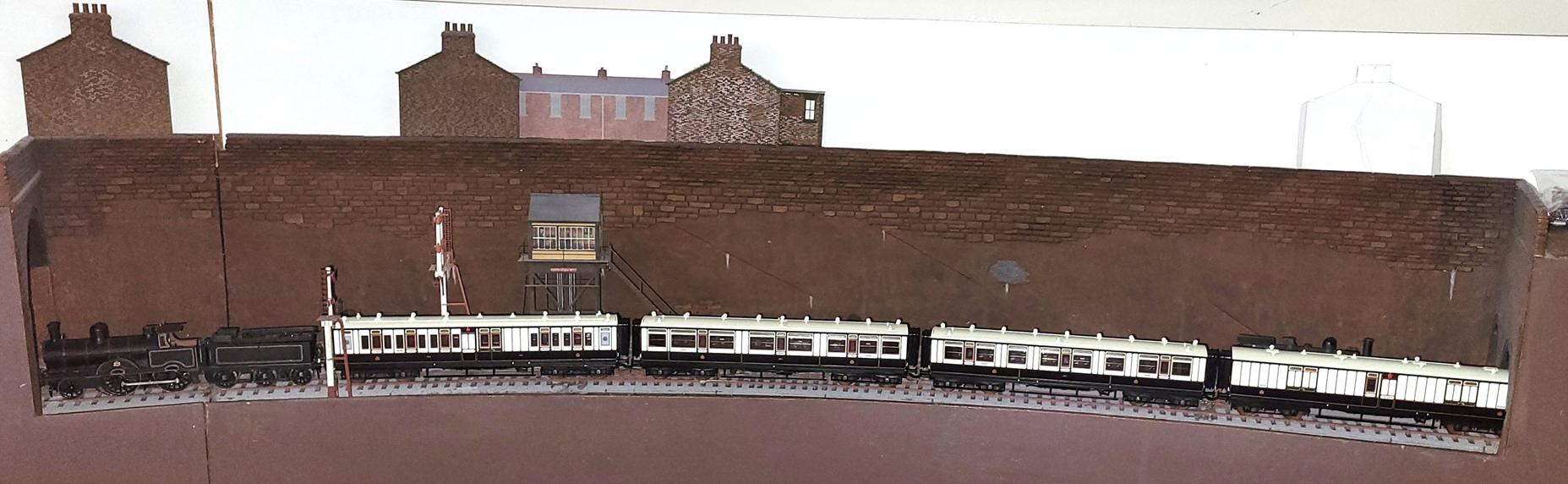
A train from Birmingham leaving Edge Hill on the Down Line passing Edge Hill No.1 signal box. The train is formed from Bachmann 50ft arc roof corridor carriages converted to EM gauge and hauled by a Waterloo class engine. Above the cutting a start has been made on the gable ends of the terraced houses that formed the street in this area of Liverpool.
23. Bridge construction
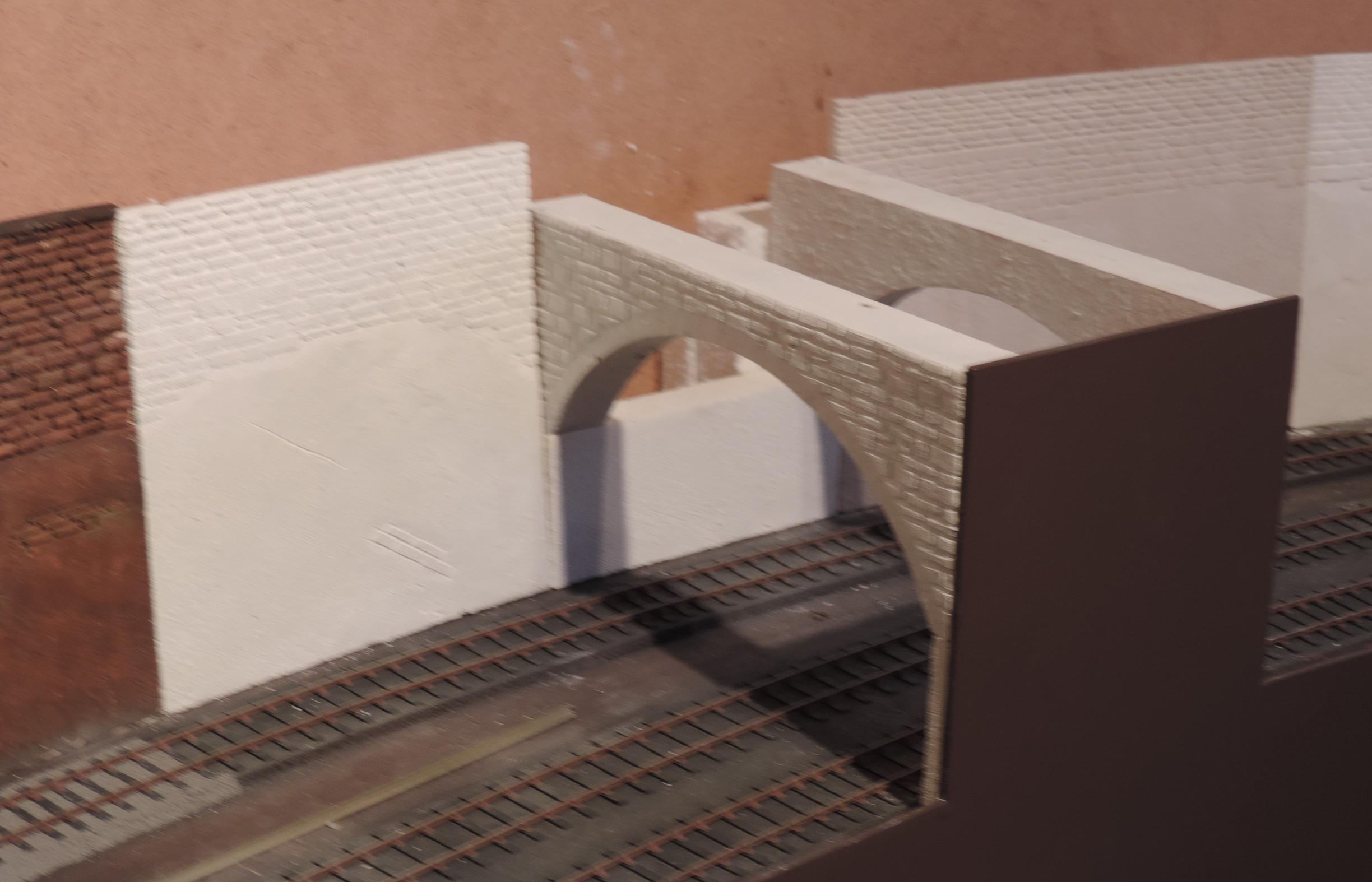
Bridges are constructed from hard wall plaster castings for each arch resting on further castings for the rock walls below the arches. The cutting walls are also cast in sections using a gently curved mould. The stone work at the top of the cutting parapet walls and on the bridge arches are scribed into the plaster. The cast parapet walls on either side of the roadway have yet to be added. The plaster is wire brushed to add texture to the rock and stonework. A sheet of embossed brick plasticard is used to form the brick arch and plasticard scribed to represent the ends of the brick arches are glued to the faces of the arches..
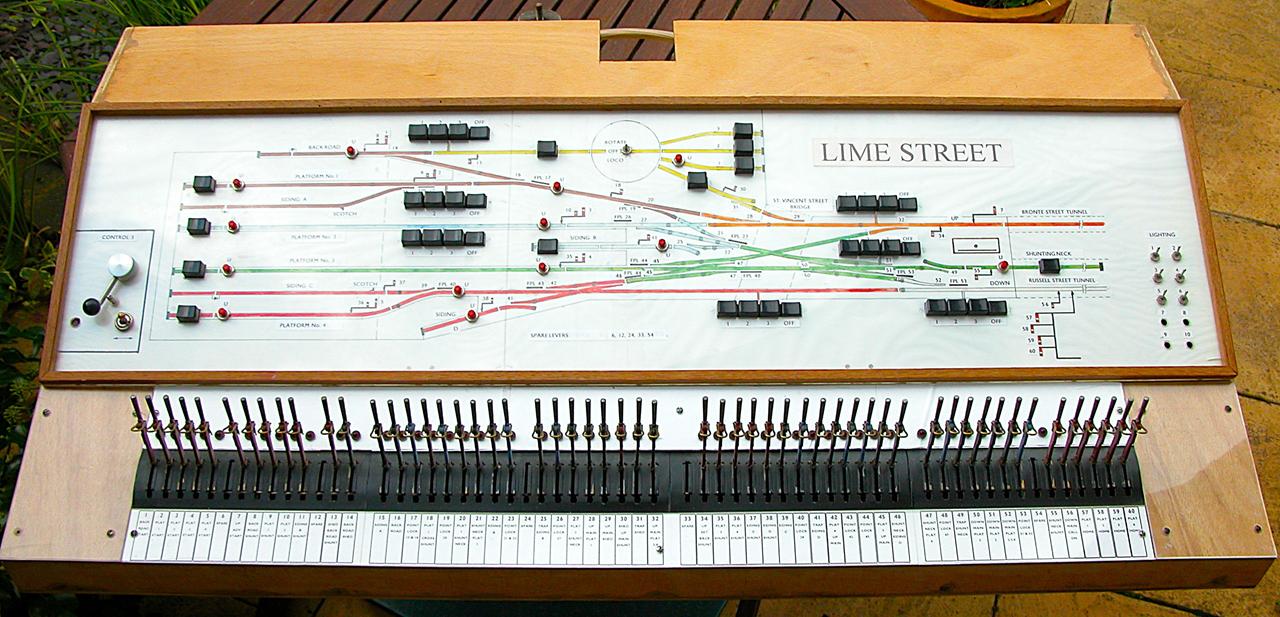
24. Control Panel
The main control panel comprises a track plan on which the black 4-button switches select off or one of three controllers for each section of track distinguished by different colours. The single black buttons are on/off switches for shorter sections of track. Red pushbuttons are used to operate the uncoupling solenoids for the Alex Jackson couplings fitted at the ends of each rake of carriages or to individual vehicles such as horse boxes that can be added to trains.
Along the front of the panel is the lever frame assembled from Model Signal Engineering kits, modified with LNWR style catch handles, with the lever function shown below the lever. The levers operate microswitches which drive the interlock logic. Behing each lever is an LED, which lights up to indicate that the lever is locked, although not mechanically. Interlocking is electronic, which disables the relevant point or signal motor from operating when locked. Facing point lock levers disconnect the associated levers from the electronics when in the locked position. The electronic locking can be turned off for testing point or signal motors or to bypass a fault.
